About Us

The La Grange Area Historical Society brings together people passionate about local history. We provide resources for study and research, operate an archive and museum, and preserve the historic Samuel Vial House as an educational and cultural landmark.

Our mission is to protect, promote, and celebrate the stories of La Grange and La Grange Park for generations to come.

Unite those interested in the history of the
La Grange area

Provide facilities for historical study and exploration

Collect, preserve, and display materials and literature of local significance

Promote education, preservation, and appreciation of our
shared heritage

Our Vision

To restore and maintain the historic Samuel Vial House as a showcase facility for education, research, archives, collections and preservation of local history. To make ongoing state of the art improvements that provide the La Grange Area Historical Society the ability to grow, thrive, and preserve the history for generations to come

Our Story

In 1972, civic-minded residents gathered at the La Grange Public Library to form what would become the La Grange Area Historical Society (LGAHS). Their mission: to preserve and promote the cultural heritage of La Grange and La Grange Park. Since that founding meeting, LGAHS has remained an all-volunteer, member-supported 501(c)(3) nonprofit organization, dedicated to collecting, preserving, and sharing the stories that shape our community.

The Vial House: Our Historic Home

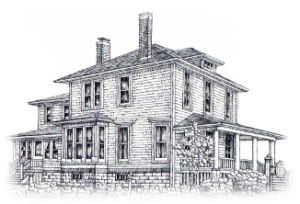
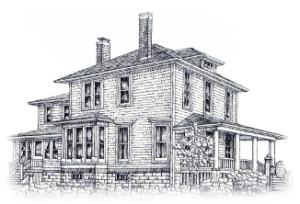
The Vial House, built in 1874 by Samuel Vial after retiring from farming, stands as a physical testament to the area’s rich past. Now home to LGAHS, it serves as both a museum and a research center open to the public. Inside, the main floor features rotating exhibits-including our highly regarded collection of period costumes-while the second floor houses archives and research materials.

Samuel Vial, who received a land grant from President Martin Van Buren in 1834, originally settled the area with his family. The house, located at the northwest corner of La Grange Road and 47th Street, has been lovingly restored and maintained to serve as a showcase for local history and learning.

The Village Of La Grange

The roots of La Grange trace back to the 1830s, when settlers were drawn west of Chicago by land grants. Joseph Vial, Thomas Covell, and Robert Leitch were among the first to claim land in the area. In 1870, Franklin
D. Cossitt purchased land from Leitch and laid out the foundation for what would become the Village of La Grange in 1879.

Cossitt, a Connecticut native and Chicago businessman, envisioned a high-quality suburban community. He planted trees, donated land for schools and churches, and built homes with lasting architectural character. His investment in infrastructure, like the Fifth Avenue (now La Grange Road) train station, spurred growth, and by 1890, La Grange
had become one of the largest towns between Chicago and Aurora.

The Village Of La Grange Park

To the north, La Grange Park emerged from a farming community settled between 1845 and 1860. The 1871 Great Chicago Fire brought a wave of displaced families westward, and many stayed purchasing land from early settlers.

Incorporated in 1892, La Grange Park began as a quiet village with limited amenities but grew steadily throughout the 20th century. Thanks to local leadership and community planning, the village introduced parks, improved services, and created zoning for light industry and shopping all of which helped it thrive. Today, La Grange Park is home to over 13,000 residents and remains a vital part of our region’s history.

The Village Of La Grange

The roots of La Grange trace back to the 1830s, when settlers were drawn west of Chicago by land grants. Joseph Vial, Thomas Covell, and Robert Leitch were among the first to claim land in the area. In 1870, Franklin
D. Cossitt purchased land from Leitch and laid out the foundation for what would become the Village of La Grange in 1879.

Cossitt, a Connecticut native and Chicago businessman, envisioned a high-quality suburban community. He planted trees, donated land for schools and churches, and built homes with lasting architectural character. His investment in infrastructure, like the Fifth Avenue (now La Grange Road) train station, spurred growth, and by 1890, La Grange
had become one of the largest towns between Chicago and Aurora.

The Village Of La Grange Park

To the north, La Grange Park emerged from a farming community settled between 1845 and 1860. The 1871 Great Chicago Fire brought a wave of displaced families westward, and many stayed purchasing land from early settlers.

Incorporated in 1892, La Grange Park began as a quiet village with limited amenities but grew steadily throughout the 20th century. Thanks to local leadership and community planning, the village introduced parks, improved services, and created zoning for light industry and shopping all of which helped it thrive. Today, La Grange Park is home to over 13,000 residents and remains a vital part of our region’s history.

Board of Directors

Executive Board

President – Katherine Padgett
Vice President – Dan Malloy
Secretary – Mara Devitt
Treasurer – Abbey Helmetag

Emeritus Board

Ellie Carroll
Jeannine McLaughlin
Mary Ann Sward
Ed Thoele
Cynthia Urbain

Board Members

Christina Andino
Beth Augustine
Stephanie Boggess
Judy Burns
Amy Current
Mike Henderson
David Knecht
Jim Petersen
Lynne Schaefer
Kait Van Cleave
Tom Veeser
Julie Workman

Staff

Sarah Parkes – Executive Director
Laurie Gibbons – Museum Concierge

General Counsel

Julie Workman